NIS2 and CRA: A turning point for cybersecurity

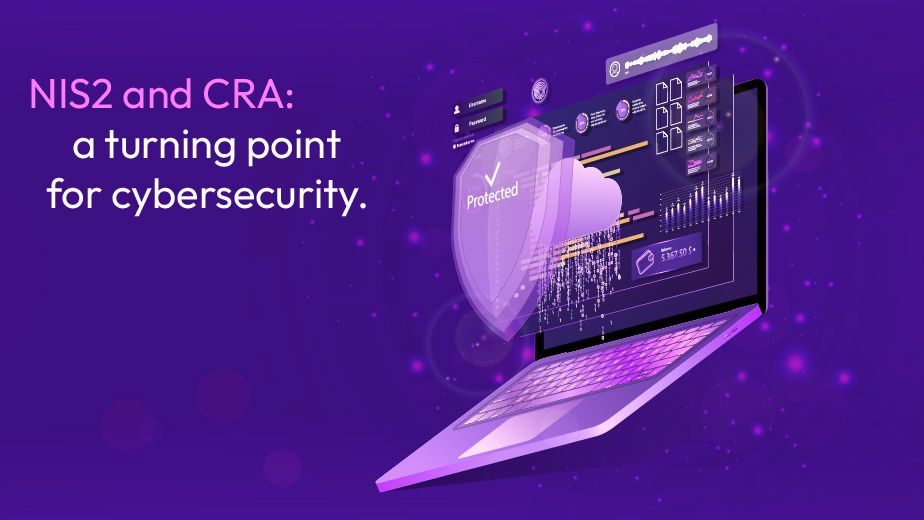
With the introduction of the NIS2 Directive and the Cyber Resilience Act, the baseline for cybersecurity is rising - and the impact goes beyond borders. These regulations do more than add requirements. They formalize accountability and raise the baseline for how organizations manage cyber risk. And they reflect a simple reality: cyber risk is business risk.
Growing pressure from both sides
Cyberattacks are becoming more frequent and more organized. A ransomware attack can stop operations for days. A weakness at one supplier can spread quickly across multiple organizations. When that happens, the impact is not limited to IT systems. It affects production, delivery schedules, contracts, and, ultimately, customer trust.
At the same time, regulation is becoming stricter and more concrete.
NIS2 extends cybersecurity requirements to many more organizations and sets clear expectations around risk management, incident reporting, and supply chain security. In simple terms, organizations must show that they understand their risks and actively manage them.
The penalties are not symbolic, reaching up to €10 million or 2% of global annual turnover for essential entities.
These are significant numbers. But the real change is not the fine itself; it is the shift in accountability.
A structural change
NIS2 makes one thing very clear: cybersecurity cannot be treated as a standalone technical function. It must be approved, understood, and overseen at the highest level of the organization. Security is expected to be visible and integrated into overall risk management.
This is not about adding more documentation. It is about closing real gaps.
Most security incidents do not happen because of one major failure. They happen because of small weaknesses, unclear ownership, siloed teams, and disconnected systems. Over time, these weak links create exposure.
Regulation is pushing organizations to look at these vulnerabilities more closely and to take a more structured approach to managing them.
As Jorma Issakainen, our SVP and Head of Critical Infrastructure explains: “Regulation makes accountability clear, but the real objective is resilience. Cybersecurity is part of business continuity. Without visibility and ownership across the security environment, organizations remain exposed.”
Beyond compliance
NIS2 and the Cyber Resilience Act mark an important milestone. They define a minimum standard for how cybersecurity should be managed. But meeting the regulation is only the starting point.
The real challenge lies in implementation, aligning teams, clarifying responsibilities, and ensuring that systems and processes work together without gaps. Compliance can be documented. Resilience has to be built.
In the next article, we will look at where compliance efforts often fall short in practice, and why alignment across people, processes and technology makes the difference between formal compliance and effective security.
Because cybersecurity today is not simply about avoiding penalties. It is about protecting the foundations your organization depends on - every day.
If you’re looking for clearer oversight across systems, suppliers, and responsibilities, contact us to explore how a more integrated approach can support your NIS2 and CRA journey.
Key takeaway: NIS2 and CRA
NIS2 focuses on how organizations manage cyber risk: governance, accountability, incident handling, and supply chain oversight.
The Cyber Resilience Act focuses on how technology is built and maintained: secure products, lifecycle security, and vulnerability management.
Together, they close the gap between operations and technology. Compliance alone is not enough if responsibilities remain fragmented across teams and suppliers.
Related stories
- Blog
Navigating NIS2: strengthening security for critical infrastructure in a digital world
2024-11-13
- Blog
Why is cybersecurity important for critical infrastructure protection?
2023-04-12
- Blog
Cybersecurity and Keyless Access Management in Critical Infrastructure
2023-04-12


